Before the Doors Open: The Essex Larder That Stocks The Griffin
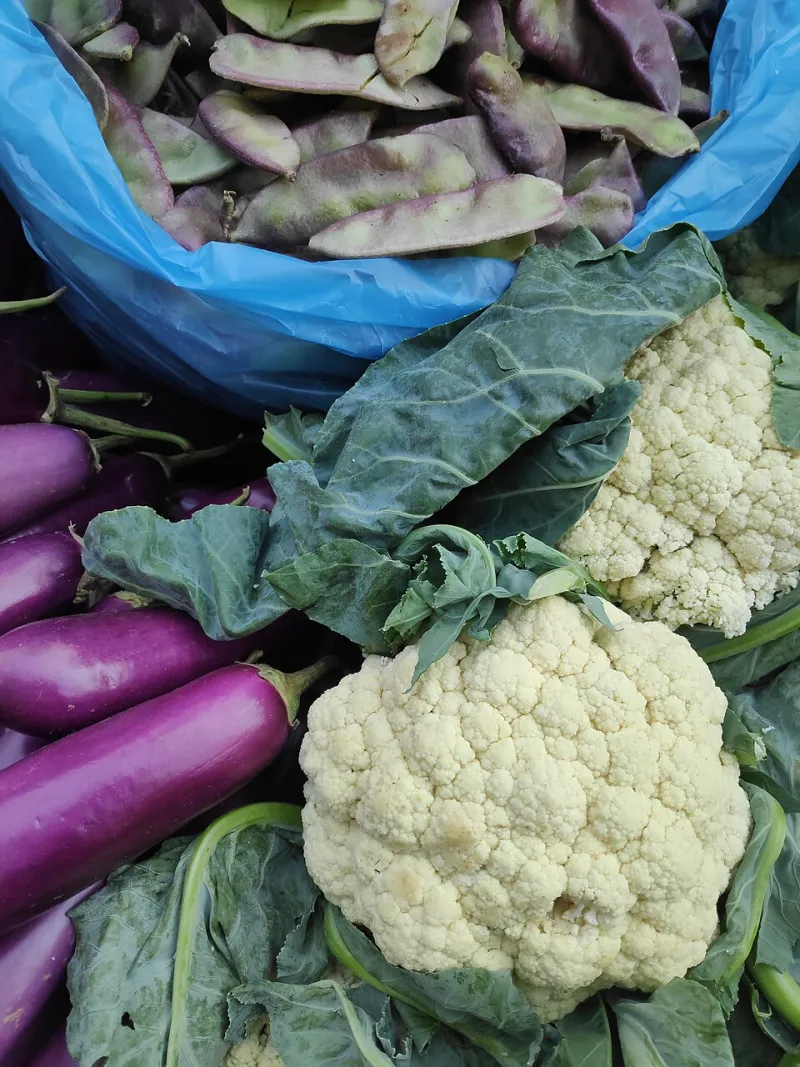
Photo: Gaurav Dhwaj Khadka, CC BY-SA 4.0, via Wikimedia Commons
At about twenty to eight on a Tuesday, The Griffin's back door is the busiest part of the building. The front door is still locked. The coffee machine is warming up. The kitchen radio is on low. Then comes the first knock, and a crate of leeks appears on the step, still cold from a field somewhere past Writtle.
It is not glamorous. There is no ribbon-cutting. But this is where a good part of the menu actually begins — not in a supplier catalogue, but in a short, familiar relay of Essex growers, bakers, butchers and dairy folk who know the pub's back step better than its front bar.
The First Knock Is Usually Vegetables
Danbury sits in a useful pocket of Essex: close enough to the Chelmer valley, the Dengie and the edge of the Colne, with market gardens and smallholdings threaded between the towns. The Griffin does not claim that every ingredient on the plate has never crossed a county line. Spices, citrus, coffee, olive oil — none of that is grown within earshot of the church. But the fresh stuff, the things that make a dish taste of a place, does most of its travelling in a van that is usually only half full.
A grower near Great Baddow turns up twice a week with whatever is ready. In November that might be cavolo nero with thick stems, knobbly celeriac, red cabbage, parsnips and a few crates of squash that have been sitting somewhere cool since October. A market garden towards Purleigh fills in the gaps on Fridays. If the sprout tops are good, they go on the specials board before the chalk has dried. If the carrots are woody, they do not.
That sounds obvious. In practice, it is a different way of writing a menu. You do not decide in advance that Tuesday will be celeriac day and then ring round to make it happen. You wait, you look in the crate, and you build around what has actually turned up.
Cream, Cheese and the Cold Chain
The dairy delivery is the one that tells you most about a kitchen. Milk and cream arrive from a farm towards the Pant valley, not far from Pleshey, and the cream that finishes a pudding has had a shorter journey than some people's commute. That is not a marketing line. It is a practical advantage: fresher cream whips better, sits better and does not need to be coaxed into behaving.
There is cheese from a small maker over towards the Colne valley, and a soft one that appears on the menu when it is ready rather than when a spreadsheet says it should. The kitchen does not pretend to have a dedicated Essex cheeseboard for every service. But when there is something good and local, it tends to find its way onto the specials board or into a pie, a tart or a lunch dish.
Meat With a Postcode
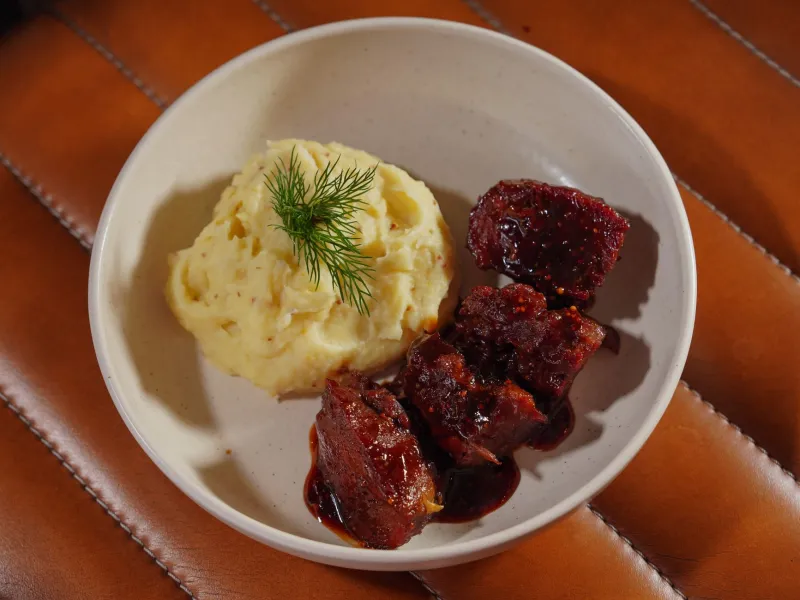
The butcher is in Braintree and has supplied the pub for years. Orders go in early in the week; what comes back is not a neat little plastic tray of anonymous protein. It is beef short rib for a slow braise, pork belly for a Sunday, sausages that actually taste of something, and occasionally a cut that requires the kitchen to think on its feet.
Some of the beef comes from farms in and around the Dedham Vale. The pork is free-range and the menu tends to use the whole animal rather than only the fashionable bits. That is partly ethical, partly practical and partly just good cooking. A pub that sells a lot of Sunday lunch needs a butcher who understands what a busy weekend actually looks like.
The Store Cupboard That Stays Local Where It Can
Not everything local is fresh. Maldon salt is an obvious one — it is in the cupboard, it is in the kitchen, and it is a quiet reminder that Essex has been in the business of seasoning for a very long time. Tiptree preserves turn up in the pantry. Honey comes from hives somewhere around Danbury, depending on the year. A baker in Maldon delivers sourdough that is still warm enough to fog up the bag.
The flour in that bread may well have come from further afield. The coffee is not Essex-grown for the very good reason that Essex is not a coffee-growing region. This is not a purity test. It is a sensible preference: when something good is made close by, use it; when it is not, be honest about it.
Why Close Beats Clever
Local sourcing has a reputation problem. Sometimes it is used to mean expensive, or worthy, or slightly preachy. At The Griffin, it mostly means flexible. A grower who knows you will ring them if the carrots are poor tends to send better carrots. A butcher who knows your Sunday service can steer you towards a cut that will actually work. A dairy that delivers twice a week means you can change a pudding on a Thursday without waiting for a lorry from the other end of the country.
It also means the menu has a memory. The winter bill of fare remembers the wet autumn. The summer menu remembers the week the courgettes went mad. That is not a gimmick. It is just what happens when you let a place and its growing season have a say.
What It Means on the Plate
You will not find a map on the menu, and nobody is going to corner you at the bar with a lecture about food miles. But if you order the pie, the Sunday roast, the soup or the pudding, there is a decent chance that a good part of it started within a short drive of Danbury. The leeks came in before the doors opened. The cream arrived in a churn. The bread was still breathing when it hit the kitchen.
That is the quiet advantage of a village pub with a back door and a short list of people who know how to use it. The menu is not designed around a supply chain. It is designed around a set of relationships — and the plate is usually better for it.
If you see a crate by the bar this November, ask what is in it. The answer is usually the first draft of dinner.